
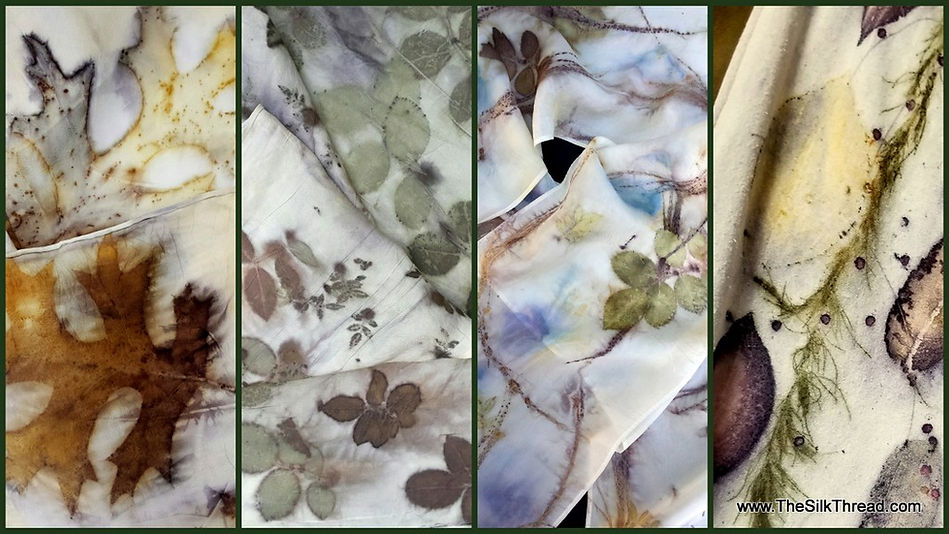

The joy of Ecoprinting in Color

Printmaking
As an art student at East Carolina University, I immersed myself in the captivating world of traditional printmaking. From the stark contrasts of black and white etchings to the sepia tones of lithography, I explored every nuance. My passion extended to vibrant colors through woodblock and silkscreen techniques.
Discovering Forms of Ecoprinting
Long before ecoprinting became a celebrated art form, I was experimenting with leaves on dampened printmaking paper, hand-cranking it through a printing press. I invite you to check out my blog: The Real Key to Ecoprinting.) where I delve deeper into this journey.

Imagine a delicate ecoprint, where earthy tones intertwine with intricate leaf impressions, creating a rich tapestry on fabric. Ecoprinting is printmaking, yet the technique, as we know it today, has only gained popularity in the past 20 years. Early Facebook posts reveal the excitement of capturing just such a simple monochromatic leaf print. Colorful effects emerged only through the clever use of mordants and the natural materials themselves.
(Visit my blog on mordants Unlocking the Secrets of Mordants in Eco Printing )
Though black and white prints hold their beauty, there’s an undeniable allure to color! Let’s explore how we can bring vibrant hues to life.

Bringing Color to Your Ecoprints
Adding color to your ecoprints can be both simple and rewarding, especially through the use of a Dye Blanket. This technique enhances the background of your prints, utilizing any dye that works well with your chosen fabric. While I won't delve into the step-by-step instructions for creating a dye blanket (you can find that in my comprehensive Tutorial on Ecoprinting in Color), I will share how the process works and encourage you to explore this fascinating world!
If you check out my post on Unlocking the Secrets of Mordants in Ecoprinting, you’ll discover how mordants influence both leaf and plant prints. Interestingly, mordants also affect the dyes you choose, leading to unexpected and beautiful results. It’s this unpredictability that makes ecoprinting so delightful!

What’s a Dye Blanket?
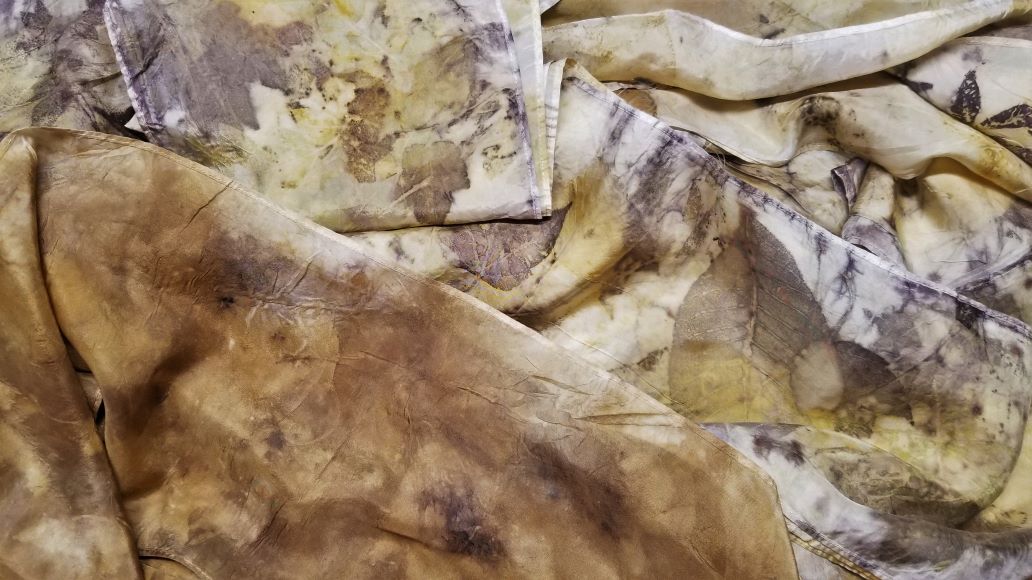
A dye blanket is simply a piece of cloth dyed a solid color. When this blanket is laid over a layer of leaves placed on another piece of fabric (the target), it deposits its color onto the background. Think of it as a delicious sandwich!


Any fabric can serve as a dye blanket, but ensure that the dye is compatible with your target fabric. For instance, if you're adding a colored background to cotton, your dye must be suitable for cotton. The same principle applies to protein fibers; otherwise, the color may wash out!
When bundling your fabric, remember to use a barrier on top of your dye blanket before rolling it up. This prevents the dye from penetrating both the top and bottom of your target fabric, ensuring that you’ll see a clear imprint!


Exploring Designs with your Dye Blankets
Your design choices with color are endless! Look closely at what these silk artists did when given free range to design!


The sky really is the limit for adding and enhancing color and designs within your ecoprinted pieces. Experiment with your favored dyes and mordants. Remember, not all leaves have printable tannin but will still act as a design! Look at this stunning piece below where the student used twine in lieu of vines to interweave among the leaves!

There are no rules!
In ecoprinting, there are no strict rules—no right or wrong ways to create with Nature's bounty. The journey of exploring different ecoprinting methods is what leads to the results you seek. Remember to be kind to yourself; striving for perceived perfection can ruin the joy of this art form. Instead of chasing after an ideal, embrace the uniqueness of your creations. What you’ll discover is a beautiful way to combine art, nature, and the great outdoors, resulting in one-of-a-kind pieces that celebrate the gifts of the earth!
Keep it simple and above all, have fun!
Warm Regards,
Theresa
____________________________________________________________________
The Newsletter part:
As always, I combine my blog with a newsletter! 2026 is shaping up to be a busy year! To see where I will be next, take a look at my drop-down menu on my website under "Workshops". I just returned from a January workshop in San Diego, and the rest of the year will find me teaching in North Carolina, Virginia, Kentucky, Michigan, Tennessee, Wisconsin, and additional locations! I also have groups coming to my studio location to learn and work on specific areas in ecoprinting!
Reach out with any questions! Make sure you follow me on Facebook ( https://www.facebook.com/thesilkthreadart/) which I update more regularly!
Theresa

Comments